
King Charles Absent As Jamaica Delivers $10 Billion Reparations Petition, UK PM Rejects Payment
By Staff Writer, NewsAmericas Now
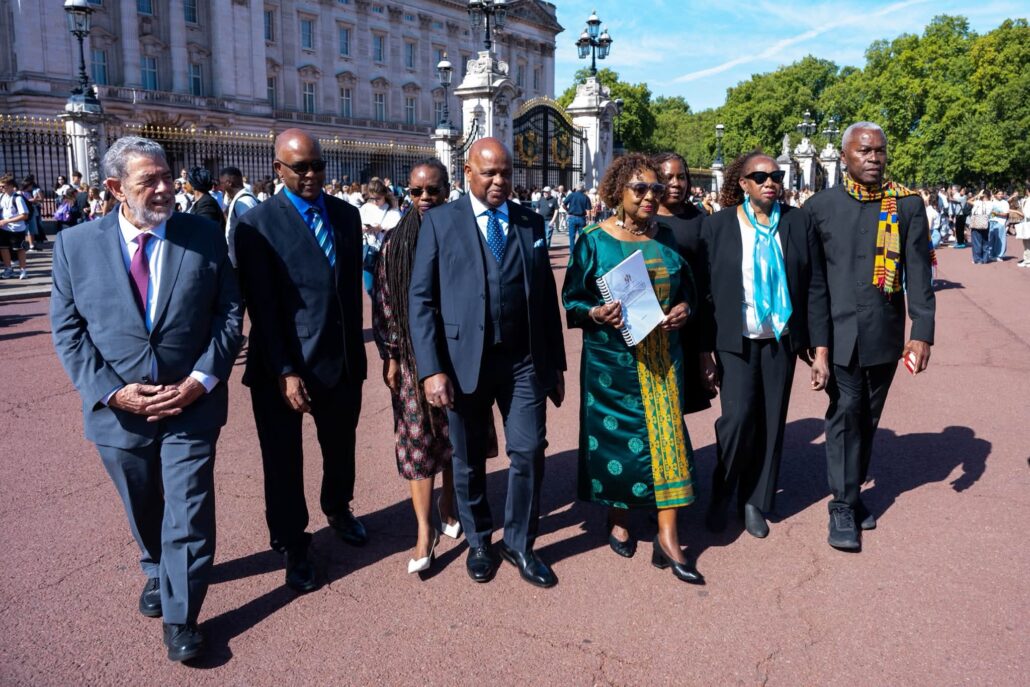
News Americas, LONDON, UK, Tues. Sep. 8, 2026: A Jamaican delegation led by Culture Minister Olivia Grange delivered a historic reparations petition to Buckingham Palace on Monday, but King Charles was not present to receive it, and the British government used the occasion to flatly reject any prospect of paying reparations.
The petition asks the King to refer three questions to the Judicial Committee of the Privy Council, the final court of appeal for Jamaica and several other Commonwealth nations: whether the enslavement of Africans in Jamaica was legal under English law at the time, whether it violated international law, and whether the UK holds a legal obligation to provide compensation for slavery’s harms. The Jamaican delegation is seeking $10 billion in reparations, and organizers say it marks the first time a Commonwealth country has pursued this specific legal route. It came on Africa‑CARICOM Day 2026.
King Charles was in Scotland at the time and was not at the palace when the petition was delivered. Graham Smith, CEO of the anti-monarchy campaign group Republic, criticized the absence: “Once again Charles ducks for cover when the issue of slavery and empire is raised.”
The petition came as King Charles is set to tour several Caribbean countries this October.
CARICOM or the Caribbean Community has spent this year pressing its case for reparations with real momentum. Every CARICOM member state backed a United Nations resolution in March recognizing the transatlantic slave trade and racialized chattel enslavement of Africans as humanity’s gravest crime. In July, regional leaders approved a revised Ten-Point Plan for Reparatory Justice, renewing demands that European nations formally account for slavery, colonialism and Indigenous genocide.
There is just one detail complicating the moral clarity of that demand: eight of CARICOM’s own member states still have the British monarch as their head of state.
Who still answers to the Crown
A man holds a flag calling for reparations in Windrush square during the commemoration.. Fifth anniversary of remembering those who have been impacted by the Windrush scandal which saw people from the Caribbean treated like illegal immigrants by the Home Office despite arriving in Britain legally. (Photo by Thabo Jaiyesimi/SOPA Images/LightRocket via Getty Images)
Antigua and Barbuda, The Bahamas, Belize, Grenada, Jamaica, St. Kitts and Nevis, St. Lucia, and St. Vincent and the Grenadines remain Commonwealth realms, meaning King Charles III, not a president or a citizen of their own nations, sits constitutionally atop their governments. Guyana, Trinidad and Tobago, and Dominica removed the monarch decades ago, in the 1970s. Barbados was the most recent to go, becoming a republic in November 2021.
The contradiction is sharpest in the two countries that have been loudest on reparations. Jamaica’s government has said publicly, repeatedly, that it intends to remove the King as head of state. Foreign Minister Alando Terrelonge told reporters the country remained “hopeful” it would complete the constitutional reforms and referendum needed to do so, a target that has already slipped past its original 2025 deadline. Antigua and Barbuda’s Prime Minister Gaston Browne has likewise pledged a referendum on becoming a republic, calling it “the final step to complete that circle of independence.”
Neither has happened yet.
ANDY BURNHAM
Within hours, Prime Minister Andy Burnham’s spokesperson reiterated the government’s position. “The UK does not and will not pay reparations,” the spokesperson said, while separately describing slavery as “abhorrent.” Successive British governments have refused to engage in reparations discussions, even while acknowledging the country significantly benefited from the slave trade; no UK government has ever formally apologized for Britain’s role in sustaining it.
GRANGE
Despite the King’s absence and the government’s rejection, Grange told Reuters she remained “encouraged” by the process. She is separately seeking the return of Caribbean artefacts held in British museums. The petition comes a month after a United Nations committee concluded that countries are legally obligated to consider slavery reparations, warning that racial discrimination cannot be addressed without “a full commitment to review and redress the ongoing harms and consequences of the trafficking of enslaved Africans and racialised slavery.”
NewsAmericasNow will continue tracking developments in the Caribbean’s reparations movement.
RELATED:
As Africa And The Caribbean Demand Reparations, A New Book Shows The British Crown Was The Architect – Not Just A Bystander
The Illegal Slave Trafficker’s Son Who Became The World’s First Guyana Born Black International Footballer




Leave a Reply
Want to join the discussion?Feel free to contribute!